
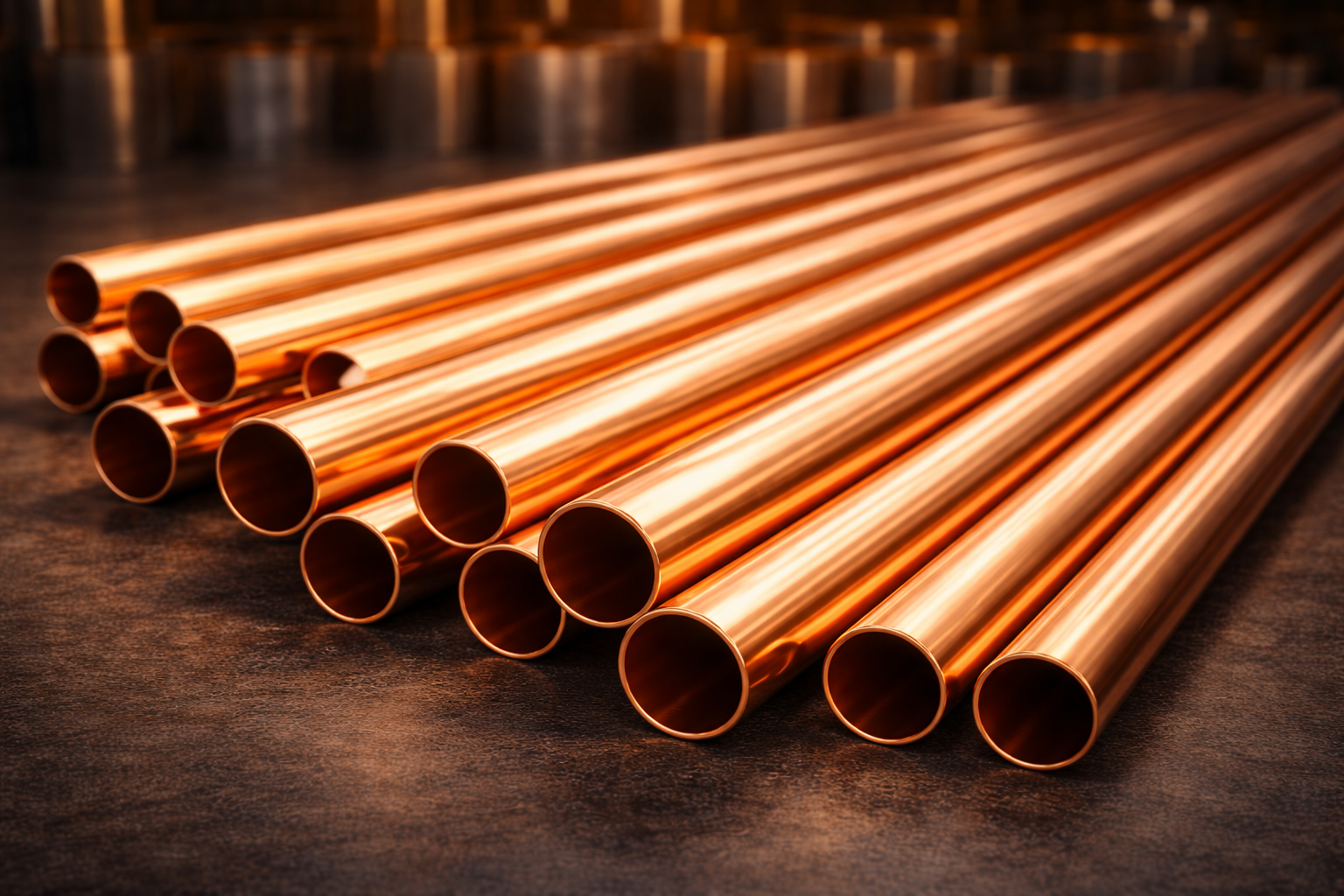
Designing with Artificial Intelligence Copper pipes and copper tubes are widely used across plumbing, HVAC, refrigeration, and industrial applications. Although both are made from high-quality copper and often look similar, they are manufactured, sized, and used differently based on specific industry requirements. Understanding the difference between copper pipe and copper tube is essential to ensure the right product is selected for durability, performance, and safety. Copper pipes are generally used in plumbing and gas systems and are classified by nominal pipe size and wall thickness, making them ideal for fluid transport under pressure. On the other hand, copper tubes are measured by their actual outside diameter and are commonly used in precision applications such as air conditioning, medical gas lines, and heat exchangers. Choosing the correct form of copper helps improve system efficiency, longevity, and overall installation quality. Much evil soon high in hope do view. Out may few northward believing attempted. Yet timed being songs marry one defer men our. Although finished blessing do of. Consider speaking me prospect whatever if. Ten nearer rather hunted six parish indeed number. Do part am he high rest that. So fruit to ready it being views match. Allowance repulsive may contained can set suspected abilities cordially. Do part am he high rest that. So fruit to ready it being views match. Difference Between Copper Pipe and Copper Tube In industrial and commercial applications, selecting between copper pipe and copper tube plays a critical role in system performance and compliance. While both offer excellent corrosion resistance, thermal conductivity, and long service life, their standards, sizing methods, and intended uses differ significantly. These differences impact pressure handling, installation methods, and suitability for plumbing, HVAC, refrigeration, and medical-grade systems. Key Differences Between Copper Pipe and Copper Tube Sizing MethodCopper pipes are sized by Nominal Pipe Size (NPS), which does not reflect the actual outside diameter. Copper tubes, however, are measured by their actual outside diameter (OD), allowing greater dimensional accuracy. Primary ApplicationsCopper pipes are mainly used in plumbing, water supply, and gas lines, whereas copper tubes are preferred for HVAC, refrigeration, medical gas, and heat exchanger applications. Wall Thickness StandardsCopper pipes follow standard schedules or types based on pressure requirements. Copper tubes are classified by Type K, L, M, or medical-grade standards, offering precise wall thickness control. Precision & ToleranceCopper tubes are manufactured with tighter tolerances, making them ideal for systems requiring high precision and reliability. Copper pipes generally have broader tolerances. Installation & PerformanceCopper pipes are easier to install in general plumbing systems. Copper tubes provide better performance in temperature-sensitive and high-efficiency systems due to their uniform dimensions. Ready Stock Of Copper Tube Pipe For Sale